



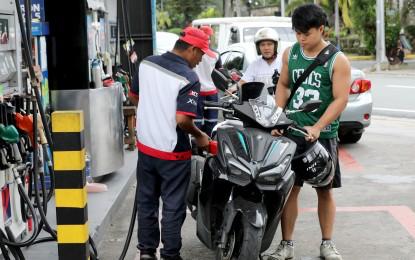

Magpapagas? Kulang na yang P100 mo!
Lumampas na naman sa P100 bawat litro ang ilang gasoline at diesel products sa ilang gas station sa Metro Manila matapos ang malakihang taas-presyong ipinatupad ngayong Martes, September 8.
Umabot sa P102.04 kada litro ang gasolina at P102.68 ang diesel plus sa ilang istasyon. Maaari namang pumalo sa P136.10 ang kerosene.
Gayunman, nag-iiba ang presyo depende sa kumpanya, lokasyon at fuel grade. Nasa P70.75 hanggang P102.04 kada litro ang gasolina; P80.18 hanggang P99.40 ang regular diesel; P89.38 hanggang P102.68 ang diesel plus; at P100.88 hanggang P136.10 ang kerosene.
Kinumpirma ng Department of Energy (DOE) ang pagtaas ng P4.69 kada litro sa lahat ng gasoline grades, P5.18 sa diesel at diesel plus, at P5.58 sa kerosene. Epektibo ang adjustment mula Setyembre 8 hanggang 14 at binaligtad nito ang rollback noong nakaraang linggo.
“Beginning tomorrow, oil companies will implement upward adjustments, may oil price hike po tayo bukas in domestic petroleum prices, driven largely by higher international oil prices following renewed tensions affecting energy flows through the Middle East,” sinabi ni Energy Secretary Sharon Garin noong Lunes.
Bukod sa pagtaas ng international oil prices at banta sa energy flows sa Middle East, nagtulak din pataas sa presyo ang paghina ng piso. Dolyar ang ginagamit ng mga lokal na kompanya sa pagbili ng imported petroleum products.
Hindi pare-pareho ang eksaktong dagdag ng mga oil company. Nagtaas ang Jetti Petroleum ng P4.60 kada litro sa gasolina at P5.10 sa diesel.
Sa Seaoil, P4.69 ang dagdag sa gasolina, P5.18 sa diesel at P5.58 sa kerosene. Nagpatupad naman ang Petron Corporation ng P4.70 dagdag sa gasolina, P5.20 sa diesel at P5.60 sa kerosene.
Para maibsan ang dagok sa sektor ng transportasyon, magpapatuloy ngayong buwan ang P12-kada-litrong fuel discount para sa mga kwalipikadong public utility vehicle (PUV) at UV Express driver. Maaari silang makatipid ng hanggang P1,800 bawat linggo.
“What matters at the end of the day is how much remains for food, electricity, school expenses, and other family needs,” ani Garin.
Tiniyak din ng DOE na sapat ang domestic fuel supply at patuloy nitong susuriin ang price movements at pagpapatupad ng inventory requirements.
“What we can do is maintain an adequate domestic supply, scrutinize price movements, enforce our inventory requirements, and provide assistance where the government can help ease the burden on our consumers,” dagdag ni Garin. /Bistado