



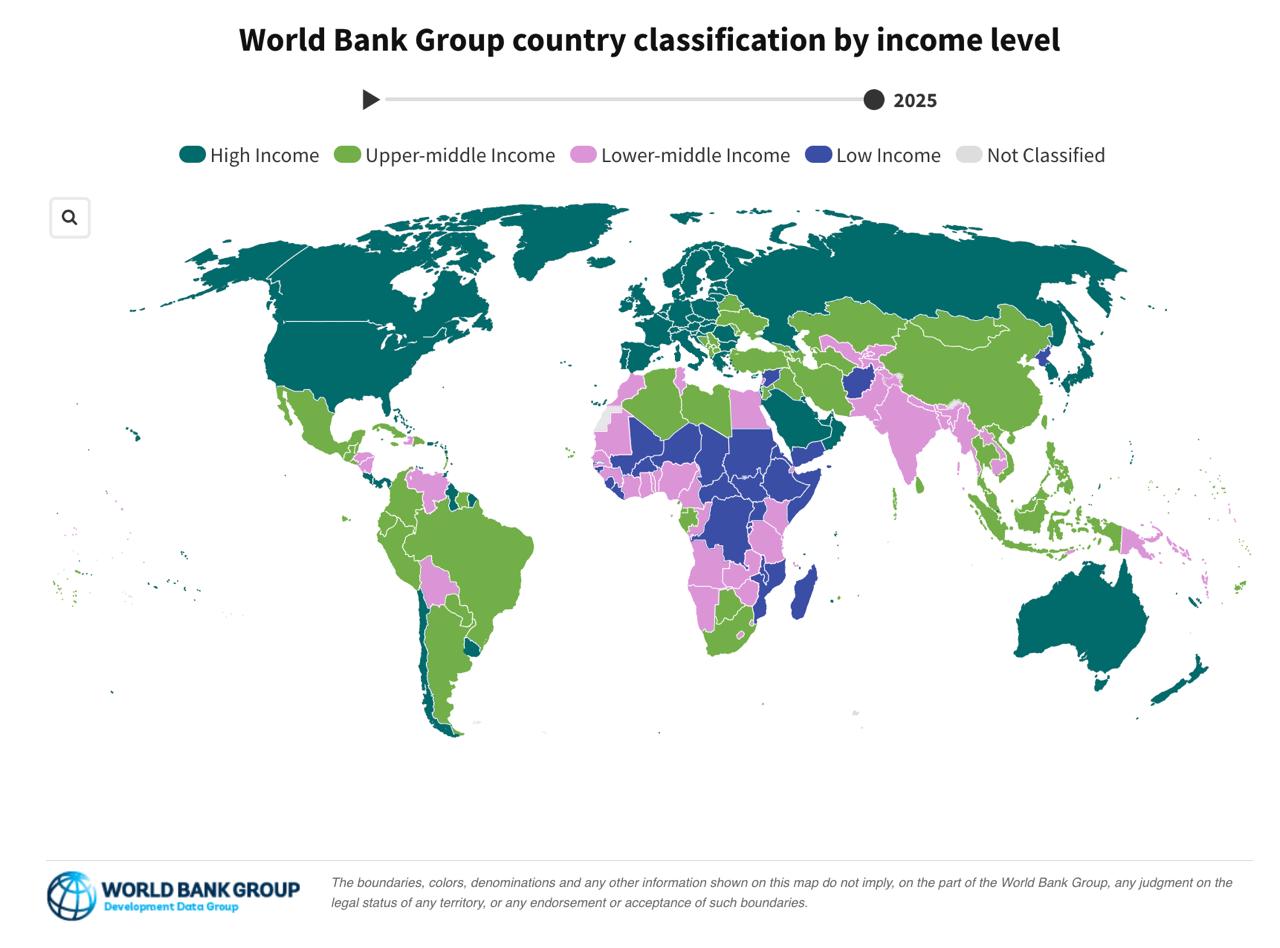

Pasok na ang Pilipinas sa upper-middle income country category ng World Bank, isang milestone na itinuring ng Marcos administration bilang patunay ng economic resilience pero kinontra ng kritiko bilang hindi awtomatikong sukatan ng tunay na pag-unlad.
Ayon sa Department of Economy, Planning, and Development (DEPDev), kinumpirma ng World Bank ang upgrade sa latest income assessment nito noong July 1. Umabot sa $4,850 ang gross national income per capita ng Pilipinas, lampas sa $4,636 threshold para sa upper-middle income category.
Ayon sa DEPDev, nakatulong sa pag-angat ang steady economic expansion, matapos lumago ang gross domestic product (GDP) ng average na 5.8 percent mula 2021 hanggang 2025. Tumaas din ng 8.5 percent ang gross national income per capita noong 2025 dahil sa matatag na pagganap sa lahat ng industriya.
“This confirms the resilience of the Philippine economy,” sabi ni DEPDev Secretary Arsenio M. Balisacan. “Despite global and domestic shocks, we have relentlessly pursued inclusive growth, strengthened fundamentals, and remained on track with our development agenda.”
Ayon sa DEPDev, inaasahang palalakasin ng bagong classification ang credit profile ng bansa, kumpiyansa ng investors, access sa financing, at investments na maaaring lumikha ng mas de-kalidad na trabaho.
Bagama’t maaaring unti-unting bumaba ang ilang concessional Official Development Assistance (ODA), sinabi ng Chief Economist na inaasahang mas malaki ang magiging benepisyo ng mas matibay na fundamentals at mas magandang market access.
“We welcome this recognition of our progress and we commit to deepen reforms to sustain our economic development,” sabi ni Balisacan.
Kinilala rin niya ang ambag ng overseas Filipino workers (OFWs) dahil kabilang ang earnings abroad sa gross national income.
“Our OFWs have played an important role in reaching this milestone. At the same time, our long-term goal is to create more high-quality jobs at home so overseas employment becomes a choice, not a necessity.”
Pero aminado si Balisacan na hindi pa nawawala ang mga hamon.
“We acknowledge that income disparities persist, and many continue to face economic difficulties. Our priority is to ensure that growth becomes more inclusive, and that its benefits reach all Filipinos,” paliwanag niya.
Sa recorded video message mula Vancouver, Canada, tinanggap ni President Ferdinand Marcos Jr. ang bagong status bilang pagpapatunay ng progreso at mga economic policies ng bansa.
“The Philippines has officially become an upper-middle-income country. After nearly four decades as a lower-middle-income country since 1987, this milestone affirms that the economic policies that we have pursued over the past four years have been effective,” sabi ni Marcos.
Ayon sa Pangulo, tumibay ang ekonomiya sa kabila ng global uncertainties dahil sa “steady economic growth, broadly stable currency, and long-term reforms.”
“It validates the progress that we have made and the resilience of the Filipino people. It is also a vote of confidence in our country’s future,” sabi niya.
“Greater confidence means more investments. More investments mean more businesses, better quality jobs, and more opportunities for Filipino families,” dagdag ni Marcos.
Giit niya, hindi dapat manatili sa papel ang economic progress.
“It is meant to open doors, put food on the table, and give every Filipino the chance to build a better life. That is the work that we will continue to do until every family feels the benefit of our country’s progress,” sabi niya.
Pero iba ang pananaw ng ekonomistang si Sonny Africa ng IBON Foundation sa upgraded income category ng Pilipinas. Aniya, lumaki ang self-rated poverty sa ilalim ng Marcos Jr administration, mula 12.2 million self-rated poor families o 48 percent noong June 2022 tungong 14.5 million o 52 percent noong March 2026, batay sa Social Weather Stations (SWS).
Ayon din kay Africa, bumaba ang manufacturing bilang bahagi ng ekonomiya sa 17.4 percent ng GDP noong 2025, ang pinakamaliit sa loob ng 76 years, habang ang agriculture ay nasa 7.9 percent, ang pinakamababa sa kasaysayan ng bansa, batay sa Philippine Statistics Authority (PSA).
“The World Bank thought up country income categories in the 1980s to help it decide what interest rate to charge on its loans…It’s a credit rating, not development,” diin niya. /Bistado