




Target ng Marcos administration ang P7.2-trillion na national budget para sa 2027, katumbas ng 21.7 percent ng gross domestic product (GDP) ng bansa.
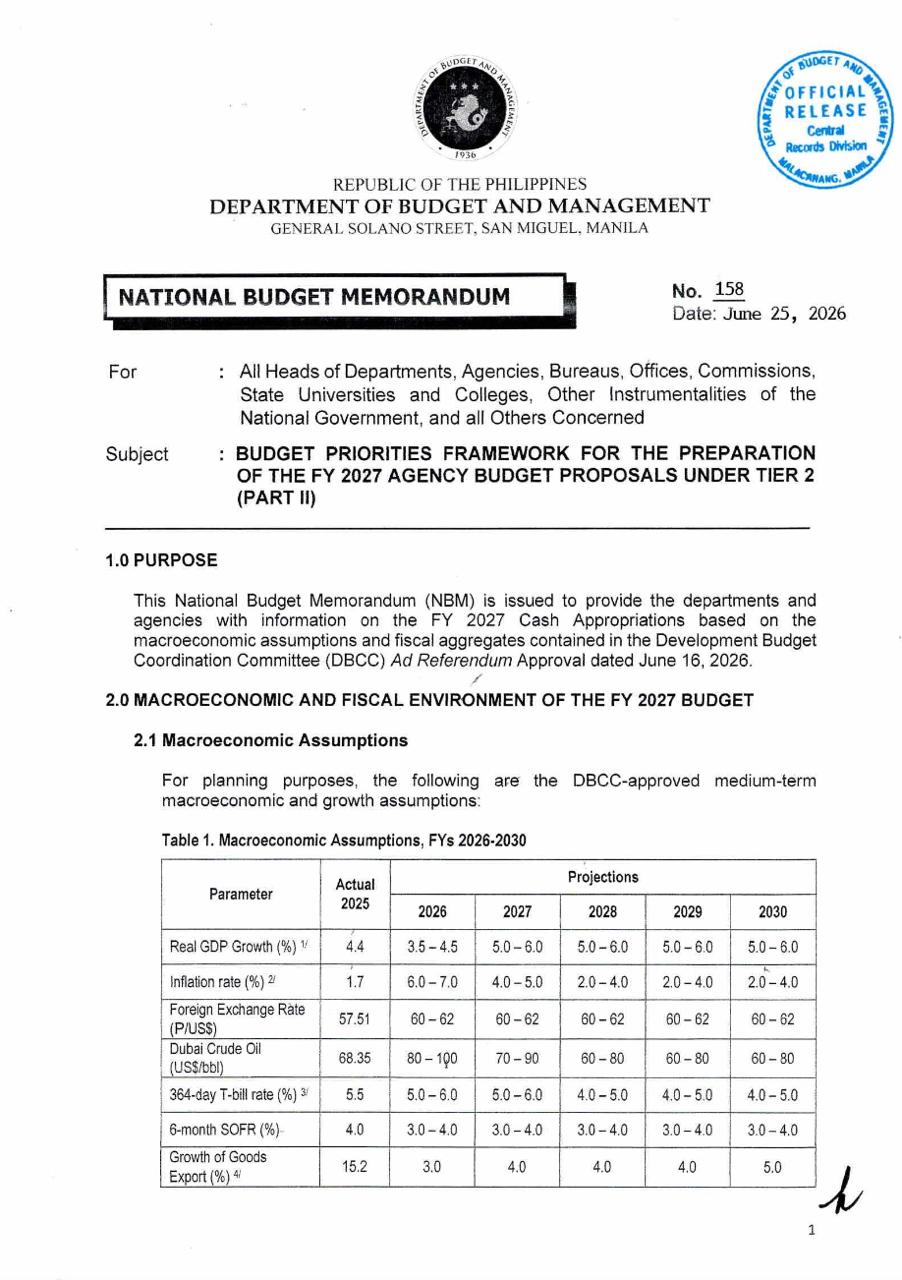
Mas mataas ito ng six percent, o P407 billion, kesa sa P6.793-trillion national budget ngayong 2026, batay sa National Budget Memorandum (NBM) No. 158 ng Department of Budget and Management (DBM).
Ang memorandum, na pinirmahan ni DBM Acting Secretary Kim Robert de Leon, ay inilabas sa opisyal na website ng ahensya nitong Biyernes.
“The proposed budget for next year will focus on programs, activities and projects (PAPs) that seek to create better opportunities and address the needs of the Filipino people, helping ensure a more resilient and secure future for all,” nakasaad sa memorandum.
Ayon kay De Leon, dumaan sa maingat na review ang mga budget proposal ng mga ahensya, na may “overarching goal of providing more funds for productive and key development expenditures.”
Isasaalang-alang din ang absorptive capacity at implementation-readiness ng ahensya sa paglalaan ng pondo para sa bago at expanded programs, activities, and projects (PAPs). Layon nito, ayon kay De Leon, na matiyak na “every budgeted peso translates to meaningful and tangible accomplishments.”
Aminado naman ang gobyerno na masikip ang fiscal space sa pagbuo ng 2027 budget.
“In crafting the proposed FY (fiscal year) 2027 budget, the government is confronted with a very narrow fiscal space, further constrained by funding pressures from automatically appropriated items, such as the National Tax Allotment shares of LGUs (local government units) and interest payments, as well as the requirements of newly-enacted laws and recurrent mandatory expenditures,” nakasaad sa memorandum.
“As such, all proposed PAPs should have undergone the necessary review and approval by relevant oversight agencies or committees within the prescribed budget preparation timelines to be considered for funding in the proposed FY 2027 Budget,” dagdag nito.
Bibigyang-prayoridad ang pre-construction activities, government counterpart funds para sa foreign-assisted projects, at natitirang funding requirements para mapabilis ang completion ng ongoing flagship projects. Ayon kay De Leon, makatutulong ito para mapabilis ang infrastructure projects at mapalaki ang kanilang economic multiplier effects.
Inilabas ang NBM 158 batay sa macroeconomic assumptions at fiscal aggregates sa Development Budget Coordination Committee (DBCC) Ad Referendum Approval noong June 16.
Kasabay nito, nanawagan ang DBCC ng recalibration ng fiscal policy para pasiglahin ang economic growth at suportahan ang vulnerable sectors sa gitna ng hamon mula sa Middle East conflict, El Niño phenomenon, at climate change.
Ayon sa memorandum, ang current macroeconomic conditions at geopolitical developments ay “have increasingly undermined” ang credibility at relevance ng growth targets at fiscal projections sa Updated Fiscal Years 2026 to 2030 Medium-Term Fiscal Framework, na inaprubahan at inilathala ng DBCC noong October 2025.
“The issues surrounding alleged anomalies in flood control projects last year and, more recently the conflict involving the United States, Israel, and Iran made a drastic impact on the country’s macroeconomic fundamentals,” saad sa memorandum.
“These further constrained the national government’s ability to meet its revenue targets, sustain economic growth, address key development gaps, and consolidate gains from past structural reforms and poverty reduction efforts.”
Lumago ng 4.4 percent ang Philippine economy noong 2025, sa kabila ng shifting global trade dynamics at persistent external headwinds. Iniuugnay ang slowdown sa climate-related disruptions, concerns sa anomalous flood control projects, at broader global economic uncertainties, na nagpahina sa construction activity at private consumption.
Itinaas ang deficit targets para sa 2026 hanggang 2030 para magpakita ng mas realistic fiscal stance habang nananatiling aligned sa growth-enhancing fiscal consolidation. Gayunman, inaasahang bababa pa rin ang deficit path ng average na 0.5 percentage point kada taon, mula 5.4 percent ng GDP sa 2026 hanggang 3.5 percent ng GDP sa 2030.
Binigyang-diin ni De Leon na kailangan ang mas epektibong prioritization ng expenditures, efficiency, at sustainability measures para mapanatili ang fiscal discipline. Dagdag niya, makatutulong ang pagbawas sa non-essential maintenance and other operating expenses para mapagaan ang budgetary pressures at debt burden, habang nagbibigay-daan sa mas malaking pondo para sa high-impact expenditures.
“These initiatives must be complemented by ensuring strict compliance with the provisions of the New Government Procurement Act, expediting the implementation of the Government Optimization Program, and facilitating full devolution,” sabi ni De Leon sa memorandum. /Bistado