


Sa gitna ng deliberasyon ng Senado sa panukalang dagdag-sahod para sa mga guro, muling iginiit ng mga pribadong paaralan na hindi sila dapat maiwan sa usapin ng salary reform na tinatalakay sa Kongreso.
Sa ilalim ng panukalang inihain ni Senator Bam Aquino noong 2025 na pinamagatang “An Act Providing Additional Support and Compensation for Educators in Basic Education” o Senate Bill No. 127, layong itaas ang sahod ng mga guro at magbigay ng dagdag na suporta sa sektor ng edukasyon.
Nilalayon ng panukala na magbigay ng karagdagang P10,000 buwanang sahod sa mga guro sa loob ng tatlong taon, na ipatutupad sa pamamagitan ng sunod-sunod na tranche: P4,000 sa unang taon, at P3,000 sa ikalawa at ikatlong taon ng implementasyon.
Saklaw ng panukala ang mga guro sa ilalim ng Department of Education, pati ang mga guro sa mga paaralang pinopondohan ng local government units, mga guro at non-teaching personnel sa ilalim ng Philippine Science High School System, at lahat ng non-teaching personnel sa Department of Education.
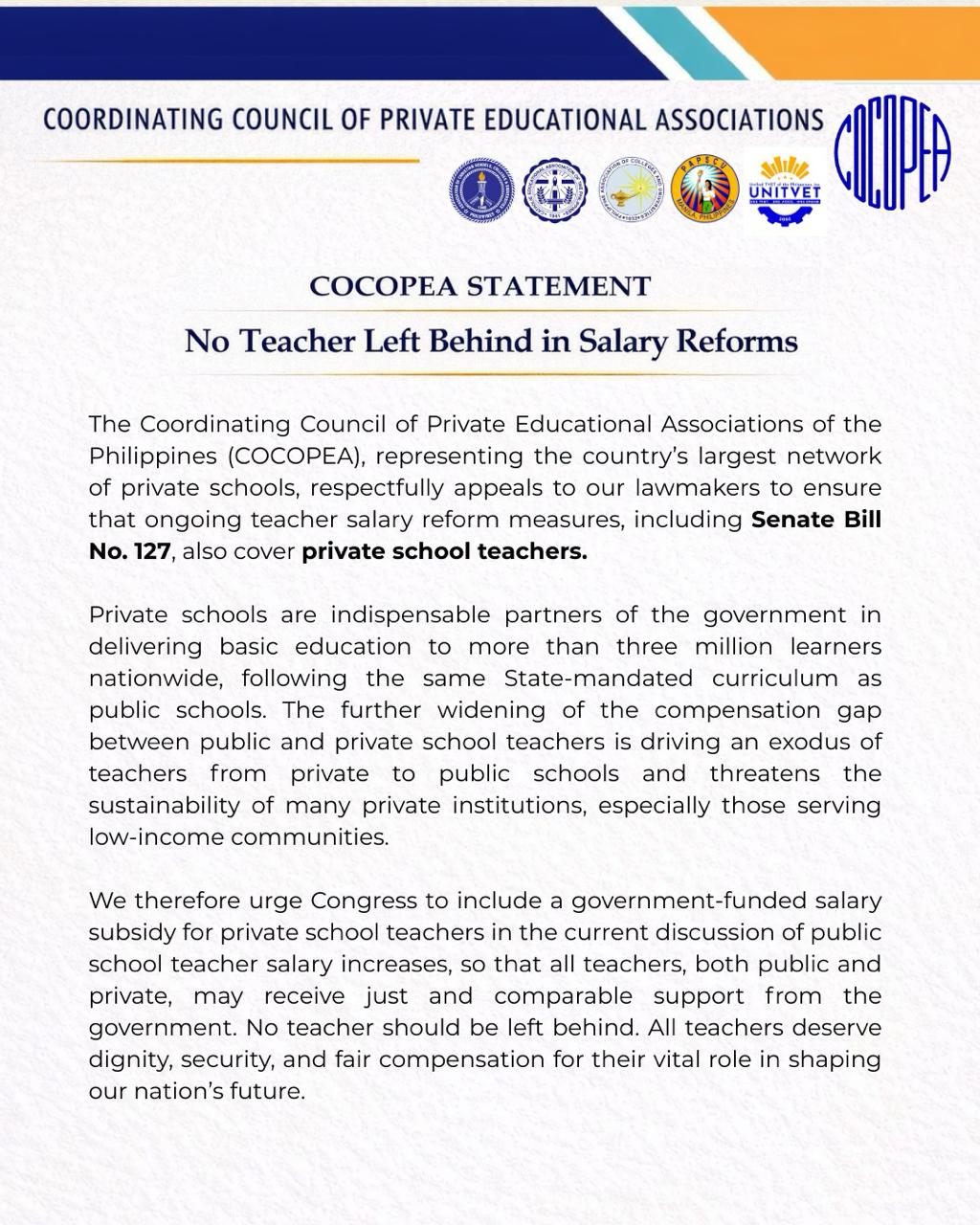
Habang patuloy na tinatalakay ng Senado ang nasabing proposal, nanawagan ang Coordinating Council of Private Educational Associations of the Philippines (COCOPEA) na dapat isama ang private school teachers sa ganitong mga hakbang.
“[COCOPEA] respectfully appeals to our lawmakers to ensure that ongoing teacher salary reform measures, including Senate Bill No. 127, also cover private school teachers,” pahayag ng grupo.
Ayon sa COCOPEA, mahalagang bahagi ng sistema ng edukasyon ang mga pribadong paaralan dahil nagsisilbi ang mga ito sa mahigit tatlong milyong mag-aaral sa buong bansa at sumusunod sa parehong curriculum ng mga pampublikong paaralan.
Gayunman, lumalala ang agwat sa sahod ng public at private school teachers. Paliwanag ng grupo, ang patuloy na disparity sa sahod ang nagtutulak sa paglipat ng mga guro mula private papuntang public schools, na nagdudulot ng kakulangan sa private sector at banta sa operasyon ng ilang institusyon.
“Private schools are indispensable partners of the government in delivering basic education to more than three million learners nationwide, following the same State-mandated curriculum as public schools. The further widening of the compensation gap between public and private school teachers is driving an exodus of teachers from private to public schools and threatens the sustainability of many private institutions, especially those serving low-income communities,” paliwanag ng COCOPEA.
Hinimok ng grupo ang Kongreso na maglaan ng government-funded salary subsidy para sa private school teachers kasabay ng salary increase para sa public school teachers.
“We therefore urge Congress to include a government-funded salary subsidy for private school teachers in the current discussion of public school teacher salary increases, so that all teachers, both public and private, may receive just and comparable support from the government.”
“No teacher should be left behind. All teachers deserve dignity, security, and fair compensation for their vital role in shaping our nation’s future,” diin ng COCOPEA. /Bistado